24/7 remote monitoring prevents industrial equipment failures by detecting abnormal operating conditions in real time and triggering alerts before those conditions escalate into breakdowns. Continuous data collection from sensors monitoring temperature, pressure, electrical load, and vibration gives operators the earliest possible warning of developing faults. The sections below address the most common questions about how remote monitoring systems work in practice, from anomaly detection to integration with existing automation infrastructure.
What types of equipment failures can remote monitoring detect early?
Remote monitoring systems detect early signs of mechanical wear, electrical faults, thermal stress, refrigerant loss, compressor degradation, and control system anomalies. Any failure mode that produces a measurable change in operating parameters before the point of breakdown is detectable through continuous sensor data. For industrial climate control equipment specifically, the most consequential early indicators include abnormal outlet temperatures, unexpected current draw, elevated vibration signatures, and pressure deviations in refrigerant circuits.
The critical distinction is between failures that announce themselves suddenly and those that develop progressively. Sudden failures, such as a blown fuse or a ruptured pipe, offer little warning regardless of monitoring capability. Progressive failures, which account for the majority of unplanned industrial downtime, produce measurable symptoms days or weeks before the point of failure. Compressor wear, for example, typically manifests as gradually increasing discharge temperatures and declining efficiency ratios long before the compressor seizes. A remote monitoring system that logs these values continuously will capture the trend; a technician visiting monthly for a scheduled check will not.
For industrial heating and cooling equipment operating in demanding environments, the failure types with the highest operational consequences include:
- Compressor degradation indicated by rising discharge temperatures or declining pressure differential
- Heat exchanger fouling detected through reduced thermal efficiency over time
- Refrigerant circuit leaks identified by pressure trending below setpoint
- Electrical supply anomalies such as phase imbalance or voltage fluctuation affecting motor loads
- Control system faults producing setpoint deviation without corresponding load change
- Fan and pump bearing wear indicated by vibration or current signature changes
How does continuous data collection differ from scheduled maintenance checks?
Continuous data collection captures operating parameters at intervals of seconds or minutes across the entire operational lifecycle of the equipment. Scheduled maintenance checks capture a single snapshot of equipment condition at the moment a technician is on site. The practical difference is that continuous monitoring detects failures that develop and resolve between visits, identifies gradual trends that are invisible in snapshot data, and provides the historical context needed to distinguish a genuine fault from a transient anomaly.
A scheduled maintenance programme operating on monthly intervals means that any fault developing in the 29 days between visits goes undetected until the next check, or until it causes a breakdown. For equipment running 24 hours a day in critical applications, a 29-day detection gap is operationally unacceptable. Continuous monitoring closes that gap entirely.
Scheduled maintenance retains value for physical tasks that remote systems cannot perform: filter replacement, mechanical inspections, calibration verification, and lubrication. The most effective maintenance programmes treat scheduled visits and continuous monitoring as complementary rather than competing approaches. Remote data informs what the technician should prioritise on arrival; the technician performs the physical interventions that remote systems cannot.
What happens when a remote monitoring system detects an anomaly?
When a remote monitoring system detects an anomaly, it generates an alert that is routed to a designated service centre, operator dashboard, or both. The response depends on the severity classification of the alert: minor deviations may be logged for review, while critical threshold breaches trigger immediate intervention. The speed of that response determines whether the anomaly is resolved before it becomes a failure.
In a well-configured system, the alert workflow operates in three stages. First, the monitoring platform identifies that a measured parameter has moved outside its defined operating range. Second, the alert is classified by severity and routed to the appropriate response channel. Third, a qualified technician reviews the alert data remotely, determines whether the deviation requires on-site intervention or can be corrected through a remote settings adjustment, and acts accordingly.
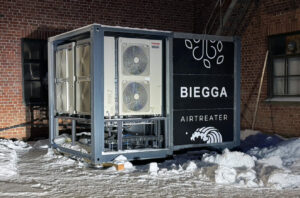
AirTreater Biegga, for example, operates with a 24/7/365 remote monitoring service in which alerts are routed directly to a staffed service centre. When an alert arrives, the service centre team accesses the system through an automated remote management platform, reviews the live operational data, and either adjusts settings remotely or dispatches a technician with a precise diagnosis already in hand. Named end users can also have access to the automation system. This approach eliminates the diagnostic delay that typically extends the time between fault detection and fault resolution in conventional service models.
The quality of the anomaly response depends on two factors: the granularity of the alert data available to the responding technician, and the authority of that technician to make remote adjustments without requiring on-site access. Systems that provide only a binary fault signal force the technician to travel to site before they can assess the situation. Systems that provide full parameter logs, trend data, and remote control capability allow most anomalies to be resolved without a site visit.
Can remote monitoring prevent failures in extreme operating conditions?
Remote monitoring is most valuable precisely in extreme operating conditions, because those conditions accelerate the development of faults and reduce the margin between abnormal operation and failure. At sub-zero outdoor temperatures, industrial heating equipment operates closer to its performance limits, making early detection of compressor stress, refrigerant pressure deviations, and control system faults more consequential than in moderate conditions.
Extreme cold increases thermal stress on compressors, raises viscosity in lubricants, and changes the pressure differential across refrigerant circuits. Each of these effects produces measurable changes in operating data. A remote monitoring system tracking discharge temperatures, suction and discharge pressures, and compressor current draw will detect when these values move outside the expected range for the ambient temperature, providing an early warning before the stress causes mechanical damage.
For equipment guaranteed to deliver nominal capacity at all outdoor temperatures, as AirTreater systems are, remote monitoring provides the operational visibility to confirm that the guarantee is being met in real-world conditions. If performance deviates from specification, the monitoring system identifies the deviation immediately rather than leaving the operator to discover it through a process failure or a heating interruption.
Remote sites and unmanned installations present a particular challenge: when no personnel are present to observe physical warning signs, continuous monitoring is the only mechanism available for early fault detection. In these environments, 24/7 remote condition monitoring is not an operational convenience but an operational necessity.
What is the difference between remote monitoring and predictive maintenance?
Remote monitoring is the continuous collection and transmission of equipment operating data to an accessible platform. Predictive maintenance is the application of analytical methods to that data to forecast when a specific component will require service or replacement before it fails. Remote monitoring is the data infrastructure; predictive maintenance is one of the analytical uses to which that data can be applied.
A remote monitoring system that only triggers alerts when a parameter crosses a threshold is performing condition monitoring. A system that analyses trends in that data, identifies patterns associated with impending failure, and generates a maintenance recommendation before any threshold is breached is performing predictive maintenance. The distinction matters because threshold-based monitoring detects failures in progress, while predictive maintenance detects failures in development.
In practice, most industrial operations benefit from both approaches operating in parallel. Threshold-based alerts provide the immediate response capability needed when a fault develops rapidly. Trend analysis and predictive modelling provide the longer planning horizon needed to schedule maintenance work during planned downtime rather than in response to an unplanned breakdown. The combination reduces both emergency response costs and unnecessary preventive maintenance interventions.
The quality of predictive maintenance output depends directly on the quality and continuity of the underlying monitoring data. Systems with gaps in data collection, low sampling frequency, or limited sensor coverage produce less reliable predictions. This is why the 24/7 continuous nature of industrial IoT monitoring is a prerequisite for effective predictive maintenance, not an optional enhancement.
How do you integrate remote monitoring into existing industrial automation systems?
Remote monitoring integrates into existing industrial automation systems through standard communication protocols, including Modbus, BACnet, and other industrial bus interfaces. Equipment with compatible communication interfaces can exchange data with a central automation platform, a building management system, or a dedicated remote monitoring service without requiring replacement of existing infrastructure. The integration approach depends on the protocols supported by both the monitored equipment and the receiving automation system.
The integration process typically involves three steps. First, the communication interface between the monitored equipment and the automation network is established, either through a direct bus connection or through a gateway device that translates between protocols. Second, the data points to be monitored, including temperature setpoints, actual values, alarm states, and operational modes, are mapped and configured in the receiving system. Third, alert thresholds, notification routing, and access permissions are configured to match the operator’s response procedures.
AirTreater systems are designed for integration with existing automation infrastructure. The automated remote management platform connects via GSM or bus interface, making it accessible from any standard web browser without requiring dedicated client software or on-site network infrastructure. Named end users can also have access to the automation system. For sites where an existing building management system or SCADA platform is already in operation, the AirTreater system can feed data into that platform alongside other site equipment, providing a unified operational view rather than requiring a separate monitoring interface.
The practical consideration for procurement and engineering teams is to verify protocol compatibility early in the specification process. Confirming that the monitored equipment supports the same communication standard as the site’s existing automation infrastructure eliminates the need for protocol conversion hardware and simplifies commissioning. For new installations on sites without existing automation infrastructure, a cloud-connected monitoring platform with browser-based access provides full remote visibility without any local network requirements.