AirTreater Čáhci maintains a nominal heating capacity of 120 kW even at very low temperatures using compressors alone, with a maximum output of 420 kW available at the same temperature threshold. For sites requiring guaranteed performance through Nordic winters, this is not a rated-at-optimal-conditions figure — it is a guaranteed minimum. The sections below address the specific mechanisms, backup options, and site types that make Čáhci the appropriate choice for cold-climate heating applications.
What heating output does Čáhci maintain at very low temperatures?
AirTreater Čáhci maintains a nominal heating capacity of 120 kW even at very low temperatures using compressors alone. Maximum output reaches 420 kW at the same outdoor temperature. The heat pump operates down to -28 °C, and when the integrated backup system is active, Čáhci guarantees at least 300 kW of heating capacity — including below -28 °C, where the backup system guarantees at least 300 kW even without external electric power in hazardous situations. These are not laboratory ratings — they are guaranteed operational figures.
The distinction between nominal and maximum capacity matters for procurement decisions. Nominal capacity — 120 kW at very low temperatures on compressors alone — represents the guaranteed floor. The system delivers at least this output regardless of outdoor conditions. Maximum capacity of 420 kW draws on the full system, including backup resources, to meet peak demand. For engineering teams sizing a heating system against worst-case winter loads, the at least 300 kW guaranteed figure with integrated backup is the relevant specification for extreme cold conditions.
This performance profile separates Čáhci from conventional air-to-water heat pumps, which are typically rated at nominal conditions of around +7 °C outdoor temperature. At very low temperatures, those systems often deliver a fraction of their stated capacity. Čáhci is designed and guaranteed to perform at very low temperatures as a standard operating condition, not an exceptional one.
How does Čáhci maintain performance in sub-zero conditions?
Čáhci maintains performance in sub-zero conditions through a combination of high-capacity compressor operation and an integrated backup system that activates when outdoor temperatures create demand beyond what compressors alone can meet. The system is engineered to treat very low temperatures as a normal operating condition, not an edge case.
The compressor circuit is sized and specified to deliver 120 kW of nominal heating capacity at very low temperatures without any auxiliary support. This means the system does not rely on backup heating to meet its baseline output in extreme cold — the compressors carry that load independently. The heat pump operates down to -28 °C, and the integrated backup system adds capacity on top of that baseline, enabling the at least 300 kW guaranteed output and the 420 kW maximum when full system resources are engaged. Below -28 °C, the backup system guarantees at least 300 kW even without external electric power in hazardous situations.
Čáhci operates as an air-to-water heat pump, distributing thermal energy through a liquid circuit. This liquid-cycle architecture provides more stable and even heat distribution across large spaces than air-to-air systems, and it maintains outlet water temperatures that are compatible with high-temperature hydronic distribution networks even at extreme outdoor temperatures. The result is a system that does not require supplementary infrastructure to function effectively in northern European winter conditions.
What backup heating options does Čáhci support?
AirTreater Čáhci supports two integrated backup heating options: a ground-source heat pump, where a borehole field is available on site, and an electric boiler, where sufficient electrical capacity exists. Both options integrate directly with the Čáhci system to guarantee at least 300 kW of heating output without temperature limitations.
The ground-source heat pump option is the preferred choice for permanent or long-term installations where a borehole field can be established. Ground-source backup delivers stable supplementary capacity regardless of outdoor air temperature, making it particularly effective during prolonged cold spells when air-source efficiency is under sustained pressure. This configuration also aligns with low-emission operational requirements, as the ground-source circuit adds capacity without increasing direct energy consumption proportionally.
The electric boiler option is suited to sites where a borehole field is not available but electrical infrastructure can support the additional load. It provides a straightforward and reliable backup path that is fully integrated into the Čáhci system rather than operating as a separate, independently controlled unit. Both backup configurations are selected and specified at the time of system design, ensuring the final installation is matched to the site’s available infrastructure and operational requirements.
How does Čáhci compare to standard heat pumps in cold climates?
Conventional heat pumps are rated at nominal conditions — typically around +7 °C outdoor temperature — and their output drops significantly as temperatures fall. AirTreater Čáhci guarantees nominal heating capacity at all outdoor temperatures, without temperature limitations. That guarantee is the core operational difference between the two approaches.
In practice, a standard air-source heat pump specified at, for example, 120 kW may deliver only 60 to 70 percent of that output at very low temperatures, depending on the unit. The facility operator is left managing a capacity gap precisely when heating demand is at its peak. Čáhci eliminates that gap. The 120 kW nominal figure at very low temperatures is not a best-case estimate — it is the guaranteed minimum from compressors alone.
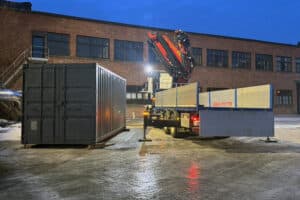
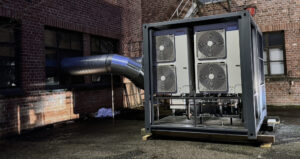
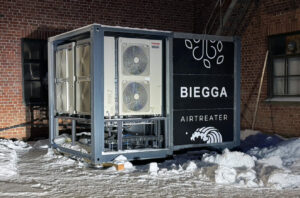
The containerised form factor adds a further operational distinction. Standard heat pump installations require permanent plant room space, civil works, and fixed infrastructure. Čáhci is operational within 4 hours of arriving on site where no heat distribution network is required, with commissioning including electrical connection completed within one working day, without permanent infrastructure commitments. If operational requirements change, the system relocates. A conventional installation does not.
For cold-climate applications where heating continuity is non-negotiable — industrial processes, construction site conditioning, temporary facilities in northern latitudes — the performance guarantee without temperature limitations is not a differentiating feature. It is a procurement requirement. Čáhci meets it as a baseline; most standard systems do not.
What types of sites benefit most from Čáhci in cold weather?
Sites that benefit most from AirTreater Čáhci in cold weather are large industrial and commercial facilities where heating continuity is operationally critical, existing heat distribution infrastructure uses a liquid circuit, and outdoor temperatures regularly fall to very low levels. Construction sites, temporary industrial installations, and facilities requiring rapid deployment also represent strong use cases.
Industrial process facilities are a primary fit. Where a production process depends on stable ambient or process temperatures, a heating system that derates in cold weather introduces operational risk. Čáhci’s guaranteed 120 kW at very low temperatures on compressors alone — rising to at least 300 kW with integrated backup — provides the capacity headroom and reliability that continuous-process environments require.
Large construction projects in northern climates represent another direct application. Temporary heating during construction phases often relies on equipment that was not designed for sustained sub-zero operation. Čáhci’s containerised format is operational within 4 hours of arriving on site where no heat distribution network is required, with commissioning including electrical connection completed within one working day, requires no permanent plant room, and relocates when the project completes. The heating guarantee applies throughout the project window, regardless of winter conditions.
Sites with existing hydronic distribution networks benefit from Čáhci’s liquid-cycle architecture without requiring infrastructure modification. The system integrates directly with high-temperature distribution networks, delivering outlet water temperatures that are compatible with existing radiator and underfloor heating systems even at very low outdoor temperatures. Remote or unmanned sites gain an additional operational advantage through an automated remote management platform, which provides real-time system visibility and full settings control via a standard web browser, with named end users also able to have access to the automation system, supported by 24/7/365 help-desk access through AirTreater’s service centre.