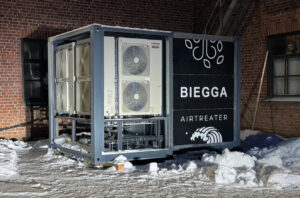
Yes, defense facilities should strongly consider upgrading their air treatment systems in 2026. Aging HVAC infrastructure in military and defense environments carries operational, compliance, and energy cost risks that have become increasingly difficult to justify against the performance guarantees and deployment speed offered by current industrial-grade systems. The sections below address the specific questions that defense procurement teams are raising before committing to an upgrade cycle.
What makes air treatment requirements in defense facilities unique?
Defense facilities require air treatment systems that guarantee continuous operation under conditions that would be considered edge cases in commercial applications. Unlike office buildings or retail environments, defense installations cannot tolerate heating or cooling interruptions, must often operate in extreme outdoor temperatures, and frequently need systems that can be deployed, relocated, or scaled without permanent civil works commitments.
The operational profile of a defense facility places demands on climate control infrastructure that standard commercial HVAC specifications simply do not address. Maintenance windows are constrained by operational schedules. Sites may be remote, unmanned for periods, or subject to rapid reconfiguration. Temperature control is often tied directly to the protection of sensitive equipment, personnel welfare in extreme climates, or the integrity of stored materials.
Procurement for defense environments also operates within a distinct compliance framework. Equipment must meet documented quality and reliability standards, and suppliers must hold verifiable credentials. For NATO-aligned procurement, this means working with registered suppliers who can provide traceable documentation. Air treatment systems that perform to specification in a laboratory but derate significantly in field conditions are not acceptable in this context. The requirement is not for rated performance at optimal conditions. It is for guaranteed nominal capacity at all operating temperatures.
What are the biggest risks of running outdated air treatment systems?
The primary risks of operating legacy air treatment systems in defense facilities are unplanned downtime, performance degradation in cold weather, and the absence of remote visibility into system status. Each of these risks carries operational consequences that extend well beyond the cost of the equipment itself.
Older HVAC systems were designed and specified against performance standards that have since been superseded. Conventional heat pumps and chillers are typically rated at nominal conditions, meaning their actual output drops significantly when outdoor temperatures fall below the rating point. At -15 °C, a system rated at 100 kW may deliver substantially less, creating a gap between the specified and actual thermal environment. In a defense context, that gap translates directly into compromised conditions for personnel or equipment.
Maintenance and parts availability present a compounding problem. Legacy systems often depend on components that are no longer in active production, extending repair lead times and increasing the risk of extended downtime. The longer a system remains in service beyond its intended lifecycle, the more likely it is that a single component failure causes a prolonged outage rather than a brief interruption.
Remote monitoring is absent in most legacy installations. Without real-time visibility into system performance, fault conditions may go undetected until they escalate. For sites that operate continuously or are not permanently staffed, this is a critical gap. A system that fails silently overnight in a Finnish winter is not a recoverable situation by the time the morning shift arrives.
How do modern industrial heat pump systems differ from legacy HVAC?
Modern industrial heat pump systems differ from legacy HVAC primarily in three areas: guaranteed cold-weather performance, containerised mobility, and integrated remote management. These are not incremental improvements to the same underlying architecture. They represent a fundamentally different engineering approach to climate control in demanding environments.
The most operationally significant difference is performance at low outdoor temperatures. Conventional HVAC systems are rated at standard conditions and derate as temperatures fall. Modern industrial heat pumps designed for extreme-climate applications guarantee nominal heating and cooling capacity across all outdoor temperatures, with integrated backup systems that activate under the most severe conditions. This guarantee is the engineering differentiator, not a marketing claim.
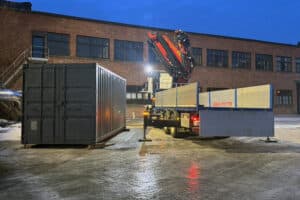
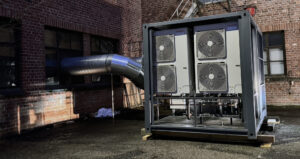
The containerised form factor is the second major distinction. Legacy HVAC requires permanent installation, plant room space, and civil works that take weeks or months to complete. Modern containerised systems connect on site in one working day and are fully operational with startup within 4 hours of arriving on site when no heat distribution network is required. For defense applications where site configurations change and assets must be redeployable, this is a structural advantage that fixed installations cannot replicate.
Remote management capability represents the third shift. Modern systems integrate with an automated remote management platform, providing real-time operational data and full settings control through a standard web browser from any location. Named end users can also have access to the automation system. Combined with 24/7/365 help-desk support, this means fault conditions are identified and addressed without requiring on-site presence. Legacy systems offer none of this.
Which air treatment technologies are best suited for defense applications?
For defense applications, the most suitable air treatment technologies are containerised industrial heat pump systems that guarantee nominal capacity at all outdoor temperatures, support remote management, and can be deployed without permanent infrastructure. The choice between air-to-air and air-to-water configurations depends on the specific site requirements and whether a liquid-cycle heat distribution network is available or needed.
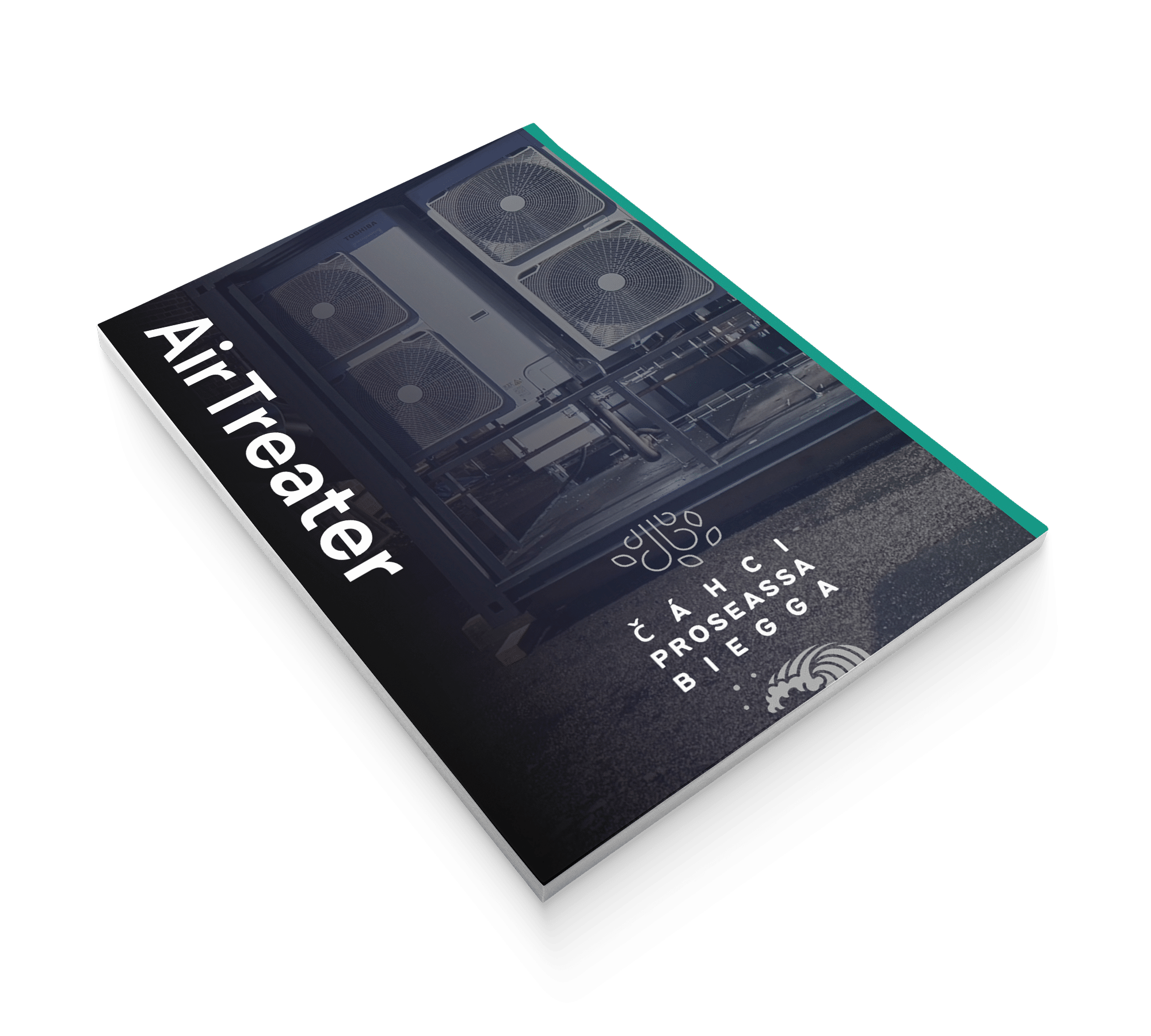
Air-to-air heat pump systems are well suited to large open spaces such as vehicle maintenance halls, temporary operational bases, and equipment storage facilities where direct air heating and cooling is the primary requirement. AirTreater Biegga, for example, delivers a guaranteed minimum of 81 kW across all outdoor temperatures, with a maximum heating capacity of 165 kW combining 84 kW of heat pump output with 81 kW of electric resistance backup. A single unit covers spaces up to approximately 1,000 m², and the containerised format connects on site in one working day.
Air-to-water heat pump systems are the appropriate choice where a liquid-cycle heat distribution network already exists or where more even temperature distribution across a large facility is required. These systems offer higher nominal capacities and can integrate with existing hydronic infrastructure, making them suitable for larger permanent or semi-permanent defense installations.
For applications involving process cooling or highly specific thermal requirements, purpose-engineered process cooling systems designed to the specifications of the individual site provide the most reliable solution. These are specified and built per installation rather than selected from a standard product range.
Across all configurations, the procurement-critical requirement remains the same: the system must guarantee nominal capacity at all outdoor temperatures, carry verifiable quality credentials, and support continuous remote monitoring. For NATO-aligned procurement, working with a NATO-registered supplier with an NCAGE code of A04WG ensures the documentation trail required for defense procurement compliance.
What should defense procurement teams evaluate before upgrading?
Defense procurement teams should evaluate six factors before committing to an air treatment system upgrade: site thermal load requirements, outdoor temperature operating range, heat distribution infrastructure, deployment timeline, remote management capability, and supplier qualification status. Evaluating these systematically eliminates the most common sources of post-installation performance shortfall.
- Thermal load requirements: Establish the minimum and maximum heating and cooling loads for the facility, including any process-specific thermal demands. Size the system to guarantee nominal capacity at the site’s minimum recorded outdoor temperature, not at standard rating conditions.
- Outdoor temperature operating range: Confirm that the selected system guarantees nominal capacity at the lowest temperatures the site will experience. Verify this as a guarantee, not a rated condition.
- Heat distribution infrastructure: Determine whether the site has an existing liquid-cycle distribution network. If it does, an air-to-water system will typically deliver more efficient and even heat distribution. If it does not, an air-to-air system eliminates the need for additional infrastructure investment.
- Deployment timeline: Assess whether the operational schedule allows for permanent installation or requires a system that can be commissioned rapidly. Containerised systems that connect in one working day and reach full operation with startup within 4 hours of arriving on site when no heat distribution network is required are the relevant benchmark for time-sensitive deployments.
- Remote management capability: Confirm that the system integrates with an automated remote management platform that provides real-time operational data and fault alerting. Verify that 24/7/365 support is available and that response protocols are defined.
- Supplier qualification: For NATO and defense procurement, confirm that the supplier holds NATO registration. Request NCAGE code documentation as part of the pre-qualification process.
Why is 2026 a strategic window for defense HVAC investment?
2026 is a strategic window for defense air treatment investment because European defense spending is at its highest sustained level in decades, procurement budgets are being allocated to infrastructure and operational resilience, and the technology available today offers performance guarantees and deployment capabilities that were not achievable at scale five years ago. Waiting carries compounding risk as legacy systems age further into their failure windows.
Finland’s commitment to raising defense spending to 3% of GDP by 2029 reflects a broader European shift toward domestic industrial resilience and the hardening of defense infrastructure. This shift creates genuine demand for deployable, certified climate control infrastructure that can be commissioned quickly, relocated as operational needs change, and managed remotely without requiring permanent staffing. Budget cycles that are open now will fund assets that remain in service for a decade or more.
The technology readiness argument is equally concrete. Modern containerised industrial heat pump systems now deliver guaranteed nominal capacity without temperature limitations, integrate with automated remote management platforms, and qualify for NATO procurement frameworks. These capabilities are available today, not in development. Procurement teams that defer the decision to a later budget cycle are extending the operational life of systems that are already past their reliable service window, while the cost of an unplanned failure in a critical defense environment is orders of magnitude higher than the cost of a planned upgrade.
For procurement teams ready to move forward, the appropriate next step is to request technical documentation and NATO supplier credentials for procurement review. Specifications should be evaluated against the actual outdoor temperature range of the target site, not against standard rating conditions, and deployment timelines should be confirmed in writing as part of the supplier qualification process.