Reactive maintenance means fixing equipment after it breaks. Preventive maintenance means servicing equipment on a planned schedule before failure occurs. The core difference is timing: reactive maintenance is unplanned and failure-triggered, while preventive maintenance is scheduled and condition-driven. For industrial operations, that timing difference determines whether downtime is a controlled event or an emergency.
In practice, most industrial facilities use some combination of both approaches. The strategic question is not which one to use exclusively, but where each one belongs in a coherent maintenance management framework.
What are the main disadvantages of reactive maintenance in industry?
Reactive maintenance creates unplanned downtime, which is consistently the most expensive form of production interruption in industrial settings. When a critical system fails without warning, the consequences compound: production stops, secondary equipment may be damaged by the primary failure, and emergency repair costs typically run significantly higher than scheduled maintenance costs for the same work. The unpredictability of reactive maintenance also makes workforce planning and spare parts inventory management difficult.
The hidden costs of reactive maintenance extend beyond the immediate repair bill. A compressor that fails mid-winter does not just cost the repair itself. It costs the lost production hours while a technician is sourced, the premium charged for emergency call-out, the expedited freight cost for parts not held in stock, and potentially the cost of restarting the process after an uncontrolled shutdown. In temperature-sensitive industrial environments, an unplanned heating or cooling interruption can damage materials, disrupt chemical processes, or compromise product quality.
Reactive maintenance also creates a reactive culture. Maintenance teams that spend most of their time responding to failures have less capacity to inspect, plan, and prevent the next one. Over time, this compounds into a cycle where deferred maintenance generates more failures, which consume more reactive maintenance resources, which further reduces capacity for planned work.
- Unplanned downtime carries higher total costs than scheduled maintenance for equivalent work
- Emergency parts sourcing and technician call-outs attract premium rates
- Secondary damage from primary failures increases repair scope and cost
- Unpredictability makes spare parts inventory and workforce scheduling inefficient
- Process-sensitive environments face quality and safety risks during uncontrolled shutdowns
How does preventive maintenance actually work in practice?
Preventive maintenance works by scheduling inspections, servicing, and component replacements at fixed intervals or based on usage metrics, before equipment reaches the point of failure. In practice, a facility maintenance team identifies critical assets, establishes service intervals based on manufacturer recommendations and operational experience, and then executes those tasks on a planned schedule regardless of whether the equipment appears to be functioning normally.
The implementation typically follows a structured cycle. Assets are catalogued and prioritised by criticality. For each asset, the maintenance team defines what tasks need to be performed, how often, and by whom. Those tasks are entered into a maintenance management system, which generates work orders at the appropriate intervals. Technicians execute the work, record findings, and feed that data back into the system to refine future intervals.
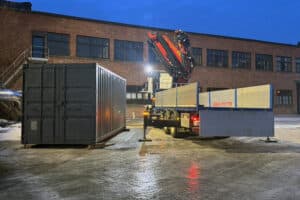
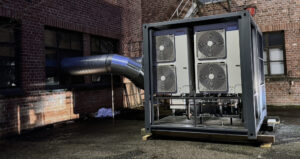
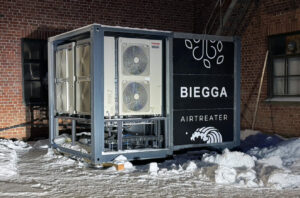
In climate control and industrial HVAC applications, preventive maintenance tasks typically include filter replacements, refrigerant checks, compressor inspections, electrical connection checks, and verification that control system setpoints remain accurate. For containerised systems like AirTreater Biegga, remote management via an automated remote management platform allows operators to monitor operational parameters continuously, flagging deviations from normal operating ranges before they develop into failures.
The discipline of preventive maintenance is in the follow-through. Intervals must be respected even when equipment appears healthy, because the purpose is to catch wear and degradation before it manifests as a fault. A filter that looks acceptable at 80% of its service interval may be causing elevated energy consumption or reduced airflow that only becomes visible as a system fault at 120%.
Which industries benefit most from preventive maintenance?
Industries where unplanned downtime carries the highest operational, financial, or safety consequences benefit most from preventive maintenance. These include power generation, oil and gas processing, pharmaceutical manufacturing, food and beverage production, biogas and energy recovery, data centres, and defence infrastructure. In each of these sectors, a single unplanned shutdown can cost far more than an entire year of scheduled maintenance activity.
Process industries are particularly well-suited to preventive maintenance because their equipment operates continuously and interdependently. A failure in one system often cascades into adjacent systems. A cooling failure in a biogas facility, for example, does not just stop the cooling process. It may force a shutdown of the entire gas production and upgrading process, with restart times measured in hours or days. The cost of that interruption dwarfs any preventive maintenance investment.
Construction and temporary industrial sites also benefit, though the calculus is different. On a construction project, the critical period is defined by the project timeline. Equipment that fails during that window cannot wait for a scheduled repair slot. Facilities using containerised climate control systems on temporary sites often find that a defined preventive maintenance schedule, combined with 24/7 remote monitoring, delivers the reliability that reactive maintenance cannot guarantee.
By contrast, industries with highly standardised, low-cost, and easily replaceable components sometimes find that reactive maintenance is economically rational for non-critical assets. The decision is always asset-specific, not industry-wide.
What does preventive maintenance cost compared to reactive maintenance?
Preventive maintenance typically costs less in total than reactive maintenance when all costs are accounted for across a multi-year period. The direct cost of a planned service is almost always lower than the combined cost of an emergency repair for the same failure, because planned work avoids emergency labour premiums, expedited parts freight, secondary damage, and production downtime. The trade-off is that preventive maintenance requires upfront investment in planning, scheduling, and executing work on equipment that has not yet failed.
The cost comparison depends heavily on the criticality of the asset and the cost of its failure. For a non-critical fan motor on a secondary ventilation circuit, the cost of preventive maintenance may exceed the cost of simply replacing the motor when it fails. For a primary process chiller or a heating system serving a production environment, the opposite is almost always true.
Total cost of ownership analysis is the correct framework for this comparison. It should include:
- Direct maintenance labour costs (planned vs. emergency rates)
- Parts and consumables costs (stock holding vs. expedited procurement)
- Production downtime costs during planned maintenance windows vs. unplanned failures
- Secondary damage costs avoided through early detection
- Energy efficiency gains from well-maintained equipment
- Equipment lifespan extension attributable to planned servicing
Industry experience consistently shows that well-maintained equipment operates more efficiently and lasts longer than equipment maintained reactively. A compressor running with a partially blocked filter draws more current, runs hotter, and wears faster than one serviced on schedule. The energy cost difference alone can justify a significant portion of the preventive maintenance budget in high-utilisation industrial applications.
When is reactive maintenance actually the right choice?
Reactive maintenance is the right choice for non-critical assets where the cost of failure is low, the component is inexpensive to replace, and failure does not cascade into other systems or create safety risks. A standard light fitting, a low-cost sensor on a non-critical circuit, or a secondary ventilation damper in a non-process area are all reasonable candidates for a run-to-failure strategy. The maintenance resource saved by not scheduling preventive work on these assets can be redirected to higher-criticality equipment.
The decision framework is straightforward: if the consequence of failure is acceptable and the cost of prevention exceeds the cost of failure, reactive maintenance is rational. If either of those conditions does not hold, preventive maintenance is the more defensible strategy.
Reactive maintenance is also appropriate as a fallback when preventive maintenance has been executed correctly but a failure occurs anyway. No maintenance strategy eliminates all failures. The goal of preventive maintenance is to reduce the frequency and severity of failures, not to achieve a zero-failure state. When a failure does occur despite scheduled maintenance, the reactive response should be documented and fed back into the preventive maintenance programme to refine future intervals or inspection criteria.
What reactive maintenance is not suitable for is critical process equipment, climate control systems in temperature-sensitive environments, or any asset where an unplanned failure triggers a production shutdown, a safety event, or a contractual breach. For those assets, a reactive-only strategy is not a maintenance approach. It is deferred risk accumulation.
How do you transition from reactive to preventive maintenance?
Transitioning from reactive to preventive maintenance requires four sequential steps: asset inventory and criticality assessment, definition of maintenance tasks and intervals, implementation of a maintenance management system, and gradual execution starting with the highest-criticality assets. Attempting to apply preventive maintenance to all assets simultaneously is a common failure mode. A phased approach focused on critical equipment first delivers the fastest return on the investment in planning and process change.
Step 1: Build the Asset Register and Assess Criticality
The first step is to catalogue every maintained asset and assign a criticality rating based on the consequence of its failure. Criticality assessment should consider production impact, safety risk, repair cost, and lead time for parts or replacement. Assets rated as critical are the first targets for preventive maintenance. Non-critical assets can remain on a reactive strategy until the programme matures.
Step 2: Define Tasks, Intervals, and Ownership
For each critical asset, define what preventive maintenance tasks are required, at what interval, and who is responsible for executing them. Manufacturer documentation provides a starting point for intervals, but operational experience and failure history should be used to refine them over time. Tasks should be specific and measurable, not generic instructions like “inspect system.” A task description should specify what to check, what the acceptable range is, and what action to take if a reading falls outside that range.
Step 3: Implement a Maintenance Management System
Preventive maintenance cannot be managed on spreadsheets or paper at any meaningful scale. A computerised maintenance management system generates work orders, tracks completion, stores asset history, and surfaces trends in failure data that inform interval optimisation. For facilities using modern industrial climate control systems, integration with remote monitoring platforms provides an additional data stream. Systems managed via an automated remote management platform, for example, generate continuous operational data that can supplement scheduled inspection findings and provide early warning of developing faults between maintenance visits.
Step 4: Execute, Measure, and Refine
Execute the planned maintenance schedule with discipline. Track the ratio of planned to unplanned maintenance work orders over time. A facility transitioning successfully from reactive to preventive maintenance will see that ratio shift progressively toward planned work. Measure downtime frequency and duration, energy consumption trends, and repair cost per asset. Use that data to refine intervals, update task descriptions, and extend the preventive maintenance programme to lower-criticality assets as capacity allows.
The transition takes time. A realistic horizon for a meaningful shift in the planned-to-reactive ratio is 12 to 24 months, depending on the starting point and the complexity of the asset base. The return, measured in reduced downtime, lower total maintenance costs, and more predictable operations, is consistent across industrial settings where the transition has been executed with discipline.